KitFire / Blog / Owners & staff
Owners & staffWill AI replace my employees? An honest answer from people who install it
Every owner who looks into AI for their business asks this, usually not out loud. You've got people who depend on their job with you, and someone is telling you a machine can now do a chunk of what they do. Fair question. Here's the honest answer, from a company that installs this stuff for a living: no, and here's specifically why not.
What actually happens when a business brings AI in
The businesses we work with don't cut staff after installing an AI worker. That's not a policy we hold, it's just what we watch happen. The person who used to answer the phone all day stops losing her evenings to voicemail catch-up — the AI already answered, already asked the right questions, already sent her the details. The office manager stops retyping the same estimate email for the fourth time this week because the AI drafted it from the job notes. Nobody's role disappears. The exhausting, repetitive slice of it does.
That's the actual pattern: businesses stop drowning. They don't get smaller.
Think about what actually eats a small-business employee's day. It's rarely the interesting part of the job. It's the fifth phone call asking the same question the first four callers asked. It's copying a customer's name and address from one system into another. It's writing "just following up on this" for the third time because nobody had a spare ten minutes to send it after the first two. None of that requires a person's judgment. All of it currently requires a person's time. That's the gap AI closes — not the job, the backlog.
Why the fear makes sense anyway
It's a reasonable thing to worry about. Plenty of industries really have used new technology as a reason to cut headcount, and owners have watched that happen elsewhere and understandably wonder if their business is next. The honest distinction is what the tool is actually for. A tool built to replace a role and a tool built to clear a backlog look similar from a distance — both involve a machine doing something a person used to do — but they land completely differently on the people who work for you. One is a threat. The other is relief from the part of the job nobody liked anyway. What we install is the second kind, because that's what an owner-operator's business actually needs: fewer dropped balls, not fewer people.
What AI is genuinely good at
Repetition. Speed. Never forgetting. It will answer the fortieth call of the day exactly as attentively as the first. It will send the follow-up email on schedule every time, without needing to remember to. It doesn't get tired at 4:45 on a Friday. These are real strengths, and they're exactly the parts of a job that wear a person down without needing a person's judgment to do them.
What AI is genuinely bad at
Judgment calls. Relationships. A handshake. Knowing that this particular customer is going through something and deserves a break on the schedule this week, or that this one always overreacts and needs a calmer tone on the callback. AI doesn't know your regulars. It doesn't know who's had a rough year. It doesn't read a room, because it's not in one. That's not a temporary limitation you wait out — it's the actual dividing line between the work a machine should do and the work a person should.
Superpowers, not pink slips
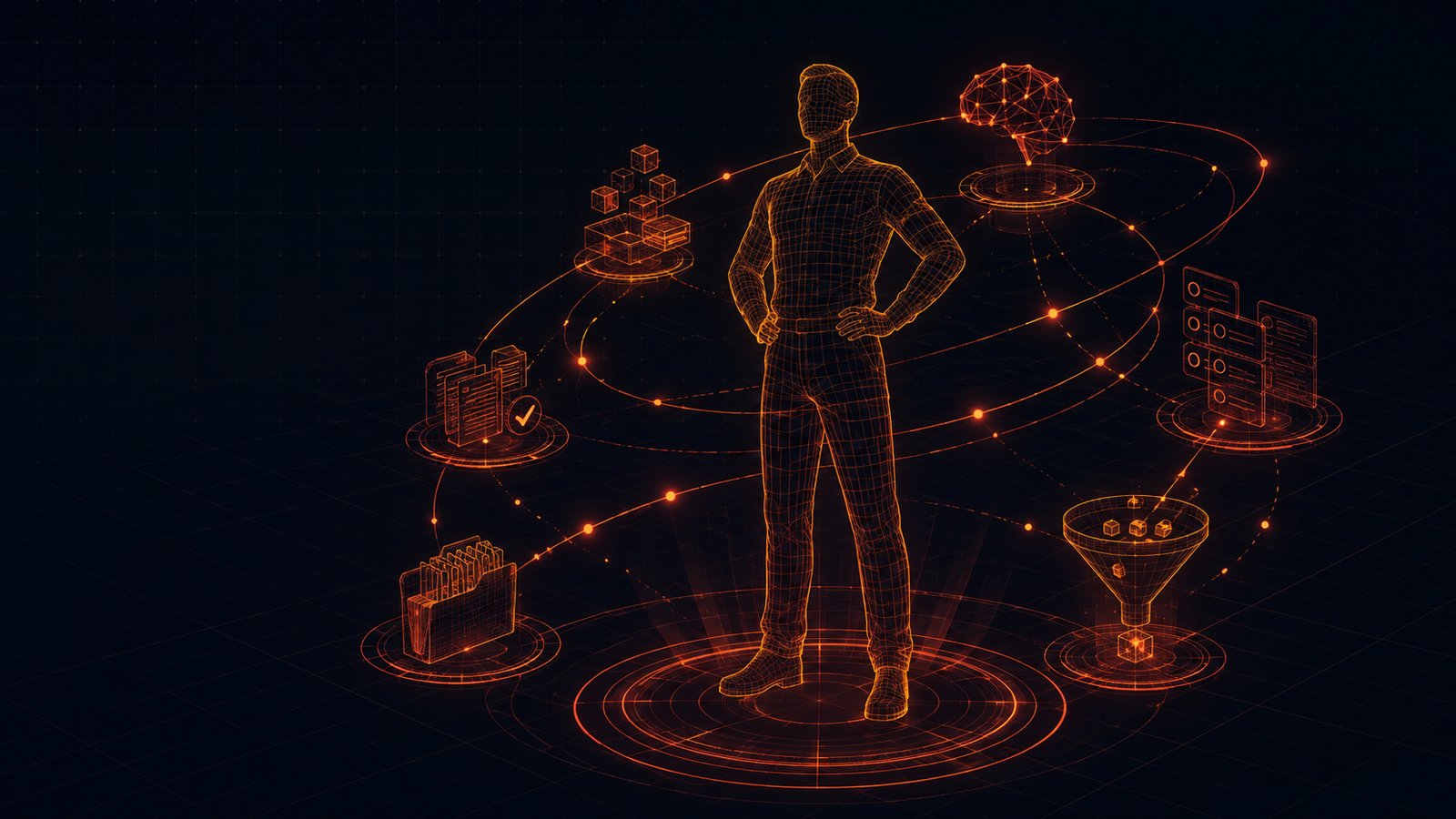
The honest framing is that AI gives your existing people superpowers. The employee who used to spend two hours a day on phone triage and data entry gets those two hours back — to actually talk to customers, solve problems, build the relationships that get you repeat business and referrals. You didn't shrink your team. You gave the team you already trust less busywork and more of the work that actually needed a human being.
This matters for retention too, even though that's not why most owners bring it in. The parts of a front-desk or office-manager job that burn people out are almost always the repetitive parts — answering the same three questions all day, chasing the same follow-ups, retyping the same fields. Take that off someone's plate and you usually don't get an employee who worries about their job. You get one who's less exhausted at 5pm and better at the part of the job that actually needs them.
What an owner should actually worry about
Not this. What's actually worth losing sleep over is the competitor two towns over whose staff already has these tools — answering every call, following up every time, quoting fast — while your team is still doing it by hand and inevitably dropping some of it. The risk isn't that AI changes your business. It's that it changes your competitor's business first, and customers notice who answers the phone and who doesn't.
See it instead of taking our word for it
We could keep describing this, or you could just call our business line — (810) 510-2801 — and talk to Blaze, the AI that answers KitFire's own phone. Ask it anything. That conversation is what we'd build for you, not a sales pitch about one.
Get it running
Working in minutes. Knows your business by day two. No software for your team to learn on their own — we build the AI worker around how your business already runs. Start with a free AI audit and we'll tell you plainly where it fits and where it doesn't.
Give your people superpowers, not pink slips.
Get a free AI audit, or call the line and hear it answer: (810) 510-2801.
Get your free AI auditFrequently asked questions
Will AI take jobs at small businesses?
The businesses we install AI workers for don't cut staff. AI takes over the repetitive parts of a job — answering every call, sending the same follow-up, retyping the same estimate — and the people who used to spend hours on that get their time back for the parts of the job that need a person.
What can AI do better than a human employee?
Repetition, speed, and memory. It answers every call the same way at 2pm and at midnight, and it never forgets a follow-up. What it can't do is make a judgment call, read a relationship, or know which customer needs a favor this month.
Should a small business owner be worried about AI?
The realistic thing to worry about isn't AI itself — it's a competitor down the road whose staff already has these tools, answering faster and following up more consistently while you're still catching up on voicemail.
How do I try KitFire's AI before committing?
Call (810) 510-2801. That line is answered live by KitFire's own AI worker, Blaze. Talking to it is the demo. You can also request a free AI audit of your business.